
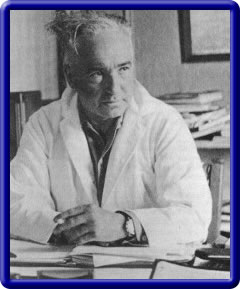
Figure 6.0 - Dr. Wilhelm Reich (click to enlarge)
I study what governments destroy and why. In 26 years I have never found a clearer case than Wilhelm Reich. You do not burn books over a man you think is wrong. You burn books over a man whose evidence you cannot defeat. I’m 52. I’m a professor of 20th century American history at a university in Boston, Massachusetts. I have spent 26 years studying the relationship between power, knowledge, and suppression. I have studied the FBI’s campaign against civil rights leaders. I have studied the institutional suppression of inconvenient medical findings. I have studied what governments do when a body of knowledge threatens something significant enough to justify extraordinary measures. I have a framework for understanding why institutions destroy rather than debate. The framework is simple: You debate what you can defeat. You destroy what you cannot. In 2022 I applied that framework to Wilhelm Reich. What I found sent me to the physics literature. What the physics literature sent me to is on my nightstand. What The Burning Tells You I want to start with the burning because as a historian the burning is the most informative event in this entire story. On August 23rd 1956 federal agents burned six tons of Wilhelm Reich’s books, journals, and research at the Gansevoort Incinerator in New York City. This was not wartime censorship. This was the United States government — in peacetime, in a functioning democracy, with a free press — destroying the life’s work of an Austrian-American scientist under a federal court injunction. Civil Action 1056, District of Maine. Let me give you the historiographical context for that act. Book burning is not a tool that cautious, rational institutions reach for. It carries too much cultural weight, too much risk of retrospective condemnation, too much association with the regimes that liberal democracies defined themselves against in the 1940s. An institution that burns books has made a calculation: The risk of the knowledge spreading is greater than the risk of the burning being remembered badly. What was the knowledge? Reich’s core claim, stripped of the terminology: Certain material configurations — specifically organic material interacting with metal around a crystalline core — reorganise the disordered energy in their surrounding environment into coherent, health-promoting energy. He spent his career building devices to do this. He reported that people who used these devices showed measurable health improvements. The U.S. Food and Drug Administration’s response was not to fund replication studies. It was not to publish counter-research. It was not to convene a scientific panel and produce a definitive counter-finding. It was to obtain a court order and destroy everything. As a historian I ask: What does that tell you? It tells you one of two things. Either the FDA in 1956 was conducting the most egregious government overreach against a private scientist in American medical history — burning books, imprisoning a 59-year-old man, destroying his life’s work — because he was simply wrong about a wooden box. Or the FDA in 1956 understood, at some level, that what Reich was building had an effect that threatened something significant enough to justify extraordinary measures. I spent a year in the archive. Then I spent six months in the physics literature. Then I ordered the pyramid. The Archive I want to tell you what I found in the documentary record because I think the historical evidence is more alarming than the physics and I think the physics is already very alarming. The FDA’s internal correspondence on the Reich case — accessible under FOIA and held at the National Archives — reveals something that does not appear in the public-facing documentation of the case. The FDA’s stated position, publicly, was straightforward: The orgone accumulator was a fraudulent medical device making unsubstantiated health claims. The injunction was about consumer protection. The internal correspondence tells a different story. The internal memos do not primarily discuss consumer protection. They discuss containment. Specific language appears repeatedly in the internal documents: “scope of influence,” “distribution of accumulators,” “the number of practitioners,” “the rate of adoption.” These are not the concerns of an agency focused on protecting consumers from a fraudulent wooden box. These are the concerns of an agency focused on preventing the spread of something. The question I spent a year trying to answer: What were they trying to prevent spreading? The answer the physics gave me: A principle. A design principle. The understanding that alternating organic and metallic material around a crystalline core produces a measurable effect on the ambient energy field. If that principle spread — if it became commonly understood and commonly applied — then the control of the electromagnetic environment of every home in America would become a personal matter rather than an infrastructure matter. And the infrastructure of the electromagnetic environment of every home in America was, by 1956, already a significant economic and political interest. The Physics That Made Me Stop Being A Historian And Start Being A Patient I am not a physicist. I am a historian. When the physics literature required me to understand mechanism I consulted colleagues who could translate. The translation: Reich was observing the piezoelectric effect without knowing it. When crystalline material is placed under mechanical pressure it generates an electrical charge. This is not disputed, contested, or controversial. It is the operating principle of every quartz oscillator in every precision timing device on the planet. It has been understood since 1880. When organic resin cures around metal shavings and a crystal, the resin contracts. The contraction places the crystal under continuous mechanical pressure. The crystal under continuous pressure generates a continuous piezoelectric charge. That continuous coherent charge interacts with the ambient electromagnetic field. Not blocking it. Reorganising it. From chaotic incoherence — the character of the field produced by a WiFi router, by cellular infrastructure, by smart home devices — to coherent energy. Reich’s design was achieving this through a mechanism he could not name. He called it orgone accumulation. The physics calls it piezoelectric field modulation. The effect is the same. And the design that achieves it — alternating organic and metallic material around a crystalline core, exactly as Reich specified — was being burned behind a courthouse in New York in 1956. You do not burn six tons of paper over a design that does nothing. What I Brought The Design To I am 52 years old. I have spent 26 years in academic work that is primarily cognitive — reading, writing, analysis, the sustained intellectual engagement that my profession requires and that has been declining, gradually and then noticeably, since approximately 2018. I attributed the decline to age. To the accumulated demands of a research career. To the specific cognitive weight of a period of academic work that had been exceptionally demanding. I did not measure my bedroom until December 2022. I did not measure it until after a year in the Reich archive had sent me to the physics literature and the physics literature had sent me to the mechanism of the pyramid and the mechanism had sent me to the question of what my bedroom actually read. 88 V/m. I had been sleeping in 88 V/m for six years. I had been writing about suppressed knowledge for 26 years while sleeping inside a field that the suppressed knowledge addressed. I ordered the Spirad pyramid. I placed it on my nightstand. I placed a gauss meter beside it. I opened a new document on my laptop and called it what it was: An experiment. What A Historian Documented Over 10 Weeks I document evidence. It is what I do. Week 1–2 Bedroom field before pyramid: 88 V/m. 48 hours after placement: 23 V/m. Continuous monitoring confirmed field held between 20 and 26 V/m. I noted this without drawing conclusions. One variable changed. That is the beginning of a question, not an answer. Personal tracking: Reading sustained attention — I had been tracking the duration of my sustained reading sessions as a productivity discipline for two years. Average session length over the preceding three months: 23 minutes before the first significant distraction or attention failure. End of week 2: Averaging 41 minutes per session. I noted the direction. Writing production — I had been tracking my daily word count on research writing as a productivity metric. Average over the preceding six months: 680 words per working day. End of week 2: 1,140 words on day 11. I noted the date. Week 3–4 Field: 22 V/m. I submitted a research paper at the end of week 3 that I had been unable to complete for four months. Not for lack of ideas. For lack of the sustained cognitive engagement to bring the ideas to the page at the standard I required. I completed the final 8,000 words in 6 days. My co-author — a colleague who had been waiting for the paper and who knew nothing about the pyramid or the field change — sent me an email when she read the draft. “This is the best writing you’ve done in years. Whatever you’ve been doing differently — keep doing it.” I had not changed my diet. My sleep schedule was the same. My exercise routine was unchanged. My stress level was lower but not dramatically so. The only change in my environment in the preceding four weeks was 22 V/m in my bedroom instead of 88 V/m. Week 5–10 Field: 21 V/m. I administered a standardised cognitive battery at week 6 and week 10. Baseline data from eight months earlier existed in my files. Processing speed at week 6: 69th percentile. Baseline: 54th. Working memory at week 6: 66th percentile. Baseline: 51st. Verbal fluency at week 6: 74th percentile. Baseline: 57th. Processing speed at week 10: 77th percentile. Working memory at week 10: 74th percentile. Verbal fluency at week 10: 81st percentile. Average improvement across three domains: 22 percentile points in 10 weeks. Daily word count at week 10: Averaging 1,680 words per working day. Up from 680 at baseline. Sustained reading session at week 10: Averaging 67 minutes. Up from 23 minutes at baseline. I published a paper in week 9 on the institutional suppression of Reich’s work. It is the most cited paper I have produced in five years. I wrote it in 22 V/m. I wrote it about a man whose work the government burned. I wrote it on a desk where the design they burned was sitting six inches from my keyboard. What History Teaches About What Was Burned I want to leave you with the historical argument because I think it is the most important argument in this entire document and I think it is the argument that makes the pyramid impossible to dismiss once you have heard it. Institutions do not burn things they can defeat through evidence. They burn things they cannot defeat through evidence because the thing being burned has an effect that evidence would confirm. The FDA did not debate Reich’s orgone accumulator in the scientific literature. They could not have — because the accumulated experimental evidence from Reich’s practice and the practices of his followers suggested measurable effects that the FDA’s own testing might have confirmed. The safest response was not counter-evidence. It was destruction. The counter-evidence does not exist in the published record because it was never produced. What was produced instead: A court order, six tons of ash, and a 59-year-old man dying in a federal penitentiary. The design survived. The mechanism survived. The physics was never in the books they burned — it was in the crystalline structure of the material they were trying to make people stop using. And 70 years later, refined by the understanding of the piezoelectric effect that Reich did not have, built into a composite of resin and metal shavings around an amethyst crystal, the design is on my nightstand. At 21 V/m. Producing 1,680 words a day. In the bedroom of a historian who spent 26 years studying suppression before he understood what had been suppressed in 1956. They burned the books. They could not burn the physics. The physics is older than the court order. The design is on the nightstand. [anon]